GC2400-RX033 Host Receiver Module 2.4G Temperature Measurement Solution - Application Fields
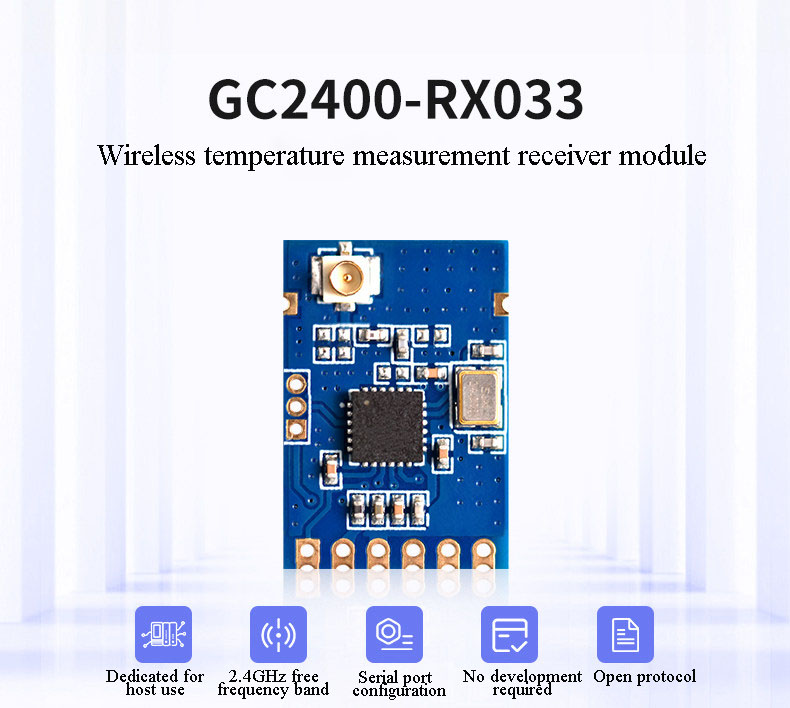
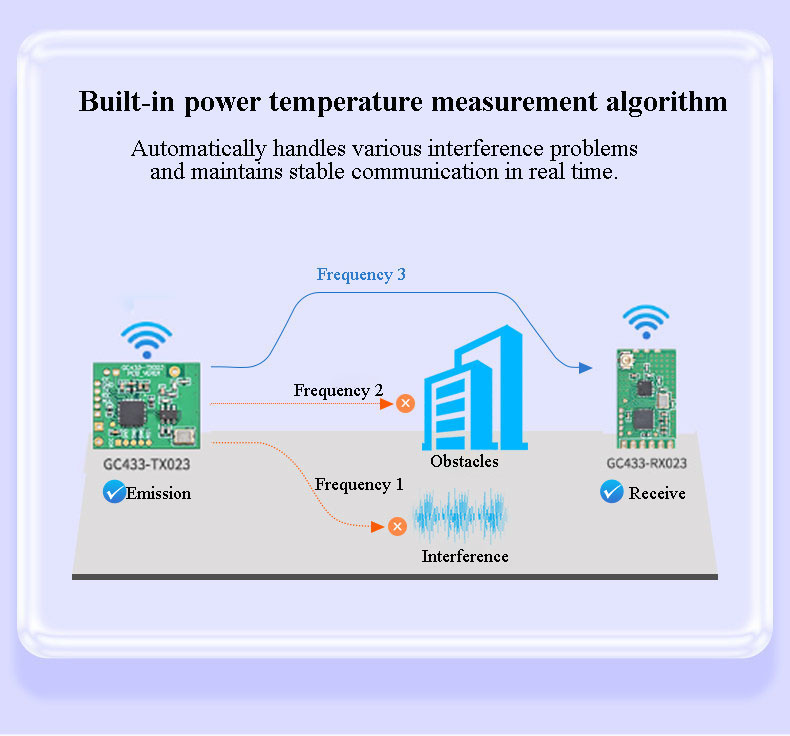
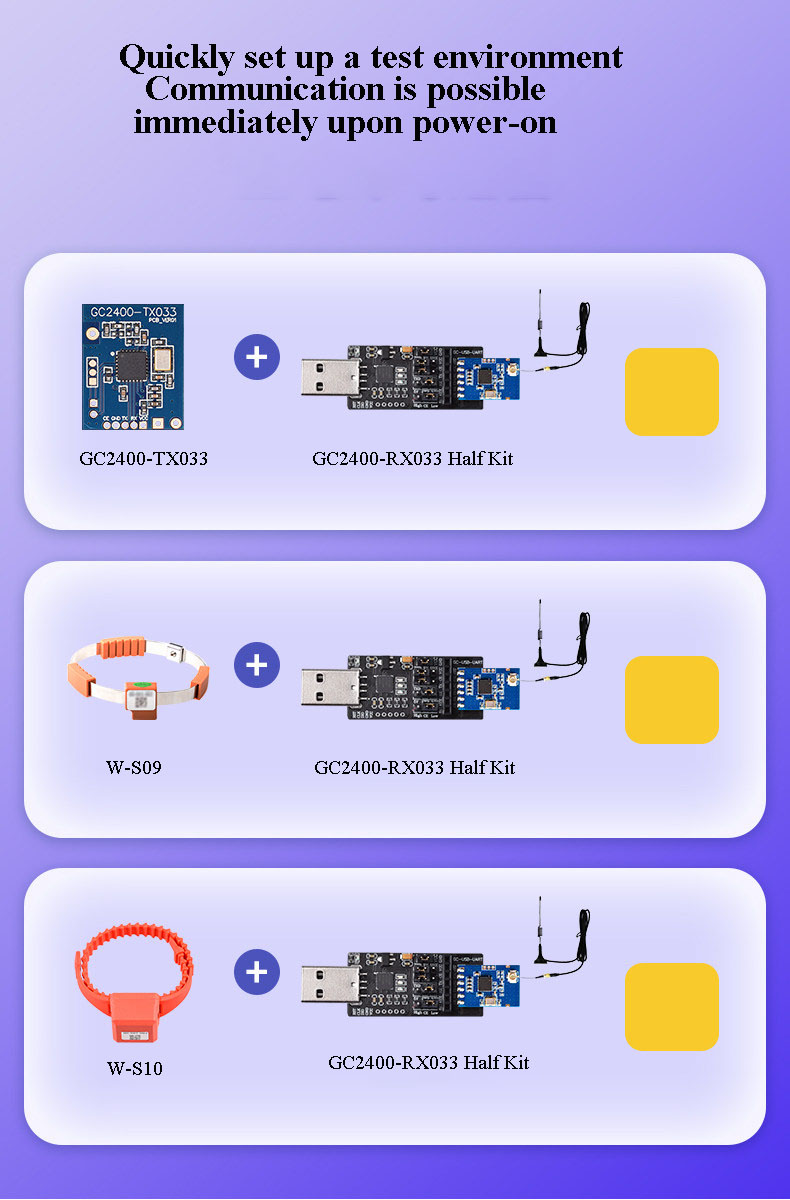
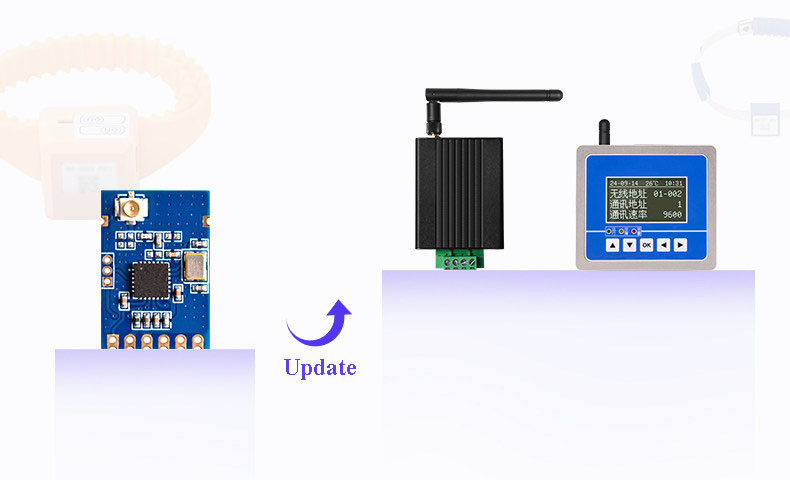
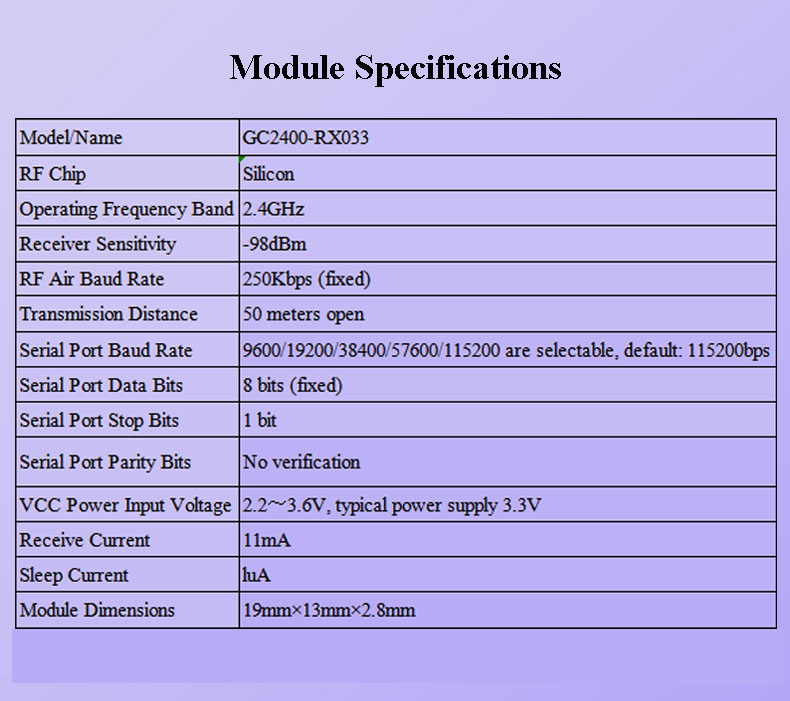
As the core back-end receiving device of the 2.4G temperature measurement system, the GC2400-RX033 Host Receiver Module is specially adapted to 2.4G active temperature acquisition modules such as the GC2400-TX033 and GC2400-TX035. Its core function is to receive and parse temperature data transmitted by front-end sensors in real time and output standard signals compatible with local monitoring terminals. Leveraging the advantages of low latency and easy deployment of the 2.4G frequency band, it focuses on local temperature monitoring scenarios with indoor/semi-indoor, short-distance, and small to medium-scale nodes, covering multiple fields such as power, industry, and building construction. The specific application fields are as follows:
I. Power System (Core Application Field)
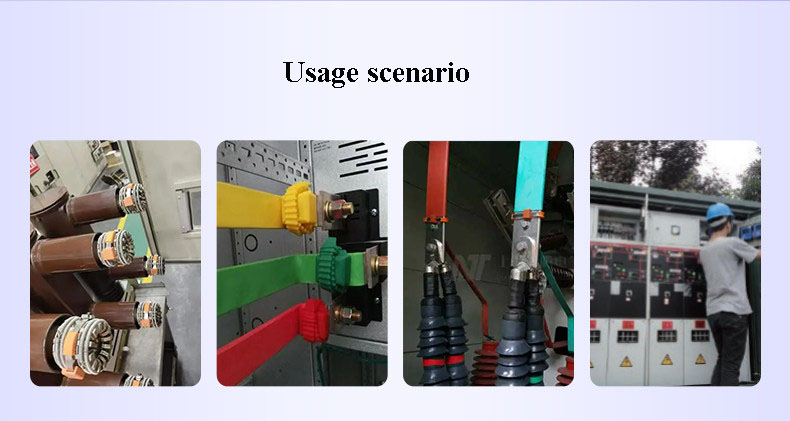
Focusing on indoor medium and low-voltage power distribution scenarios, it meets the local temperature monitoring needs of the power IoT, realizes real-time localized temperature monitoring of power distribution equipment without remote networking, and avoids the risk of electrical fires:
- Indoor small distribution cabinets and boxes: Receives 2.4G temperature sensor data in the cabinets to monitor the temperature of key parts such as wiring terminals and circuit breakers, suitable for low-voltage power distribution facilities in residential communities, office buildings and factories;
- Building weak current boxes and power distribution shafts: Matched with GC2400 series acquisition modules to receive temperature measurement data of weak current equipment and power distribution nodes, adapted to localized temperature monitoring of power distribution systems in high-rise buildings;
- Indoor terminals of power distribution networks: Used for auxiliary temperature measurement in substations and small temperature measurement systems in power distribution rooms, receives short-distance sensor data and feeds back temperature abnormalities in real time, suitable for local on-duty scenarios in power operation and maintenance.
II. Industrial Production Field (Adapted to Small-Scale Scenarios)
Providing a low-cost, easy-to-deploy local temperature measurement receiving solution for the short-distance, few-node temperature measurement needs of small industrial production lines and workshops:
- Small industrial production lines: Receives 2.4G temperature measurement data of key production line equipment (motors, control cabinets, transmission components), adapted to local temperature monitoring of production lines in electronic processing plants and small machinery factories;
- Auxiliary workshop temperature measurement: Used for temperature monitoring of power distribution nodes and small energy storage equipment in workshops, receives short-distance sensor data and supports local alarm, suitable for simple temperature measurement scenarios that do not require remote data upload;
- Precision instrument workshops: Matched with high-precision 2.4G temperature acquisition modules to receive temperature data during instrument operation, ensuring the stable operation of precision equipment (such as testing instruments and small automated equipment).
III. Building and Construction Sector
Adapted to the indoor temperature measurement needs of commercial buildings, residential buildings and office buildings, focusing on the localized temperature monitoring of auxiliary systems such as power distribution and security:
- Commercial building power distribution systems: Receives temperature node data of floor distribution cabinets and fresh air systems, realizes local temperature monitoring of building power distribution and ventilation equipment, and links with security systems to feed back abnormalities;
- Residential power distribution facilities: Used for temperature monitoring of distribution boxes in residential building units and corridor weak current equipment, receives 2.4G sensor data, adapted to the local operation and maintenance and fault troubleshooting needs of property management;
- Building security supporting: Matched with security temperature sensors to receive temperature data of key indoor areas (such as equipment computer rooms and power distribution rooms), realizing the linkage of security and temperature monitoring.
IV. Precision Equipment and Small-Scale Energy Storage Field
Providing a localized receiving solution for small equipment scenarios with requirements for temperature measurement accuracy and deployment convenience:
- Precision electronic equipment: Receives temperature data of server cabinets and laboratory equipment, adapted to local temperature monitoring in small areas of data computer rooms and laboratories, ensuring the constant temperature operation of equipment;
- Small-scale energy storage equipment: Used for temperature monitoring of household energy storage and small industrial energy storage equipment, receives temperature data of battery packs and control modules, and feeds back temperature abnormalities locally to avoid energy storage safety risks;
- Medical auxiliary equipment: Adapted to the temperature monitoring of small medical equipment (such as testing instruments and small physiotherapy equipment), receives 2.4G temperature sensor data to realize local supervision of equipment operating temperature.
V. Other Niche Adaptation Scenarios
- Warehousing environments: Used for local temperature monitoring of small warehouses and reagent warehouses, receives temperature and humidity integrated 2.4G sensor data, adapted to simple warehousing temperature measurement needs without cloud management;
- Agricultural greenhouses: For temperature monitoring of small greenhouses and seedling greenhouses, receives 2.4G temperature sensor data, and displays and feeds back temperature locally, adapted to farmers' local management needs;
- Small computer rooms: Adapted to local temperature monitoring of campus computer rooms and small enterprise computer rooms, receives temperature measurement data of power distribution and server nodes in the computer rooms, helping operation and maintenance personnel quickly troubleshoot faults.
Core Adaptation Characteristics
All application fields revolve around the core of local reception, short-distance, and small to medium-scale nodes. The module has no integrated remote networking function (and can be paired with a DTU for extended remote data upload), and is adapted to scenarios that do not require cloud data management and focus on local operation and maintenance. Matched with 2.4G temperature acquisition modules, it realizes a low-cost, rapidly deployable closed-loop for local temperature measurement, and is widely suitable for simple temperature measurement needs sensitive to deployment space and cost.